
Views: 0 Author: Site Editor Publish Time: 2026-03-10 Origin: Site


Outdoor sealing fails for simple reasons. Sunlight hits surfaces daily. Ozone keeps reacting in the air. Rain and humidity creep into tiny gaps. Temperature swings keep squeezing joints. Many materials harden, crack, and start leaking.
The EPDM Sealing Strip performs better outdoors because it resists UV, ozone, moisture, and wide temperature shifts. It stays elastic and durable, so it keeps contact pressure longer. Manufacturers like Xinqiang use it in demanding exterior sealing systems. In this article, we explain why EPDM works outdoors. You’ll see the key performance advantages. We’ll also cover where it fits best, and how buyers can spec it with more confidence.
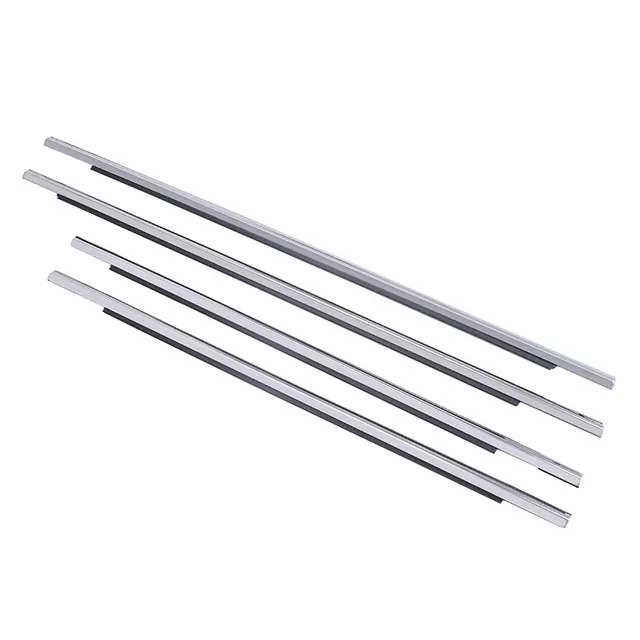
Outdoor performance starts at the molecular level. Many elastomers contain weak carbon bonds. Ozone attacks them. Sunlight accelerates aging. Mechanical strength drops. EPDM differs because its backbone is saturated. It resists chain scission and surface cracking under UV and ozone exposure. This structure gives it stability in real-world outdoor climates.
Temperature range also matters. Outdoor installations face freezing nights and heated surfaces under direct sun. EPDM sealing strips commonly operate from around -40°F up to 212–250°F depending on formulation. They stay elastic across this span. They do not become brittle in cold air. They do not soften excessively in summer heat.
Moisture resistance adds another layer of protection. Closed-cell EPDM absorbs very little water. It prevents long-term swelling or degradation in humid conditions. For building facades or vehicle perimeters, this consistency protects internal structures from corrosion and fatigue.
Below is a simplified comparison of outdoor stress versus EPDM response:
Outdoor Factor | Typical Rubber Reaction | EPDM Sealing Strip Response |
UV radiation | Surface cracking | Maintains flexibility |
Ozone exposure | Molecular breakdown | Resists oxidation |
Heavy rain | Water penetration | Low absorption in closed-cell form |
Heat and cold cycles | Shrinkage or hardening | Stable elasticity |
Tip: When specifying outdoor seals, define UV exposure level and operating temperature band first. It helps suppliers tailor compound formulation precisely.
In outdoor environments, sealing strips face constant mechanical stress. They are pressed, released, and pressed again over years of use. To remain effective, the material must recover quickly and maintain consistent sealing pressure without losing shape.
An EPDM Sealing Strip designed for low compression set helps ensure:
● Long-term retention of original profile thickness after repeated compression cycles
● Stable contact pressure between sealing surfaces over extended service life
● Reduced risk of leakage caused by permanent deformation
● Consistent performance under varying temperature conditions
Outdoor assemblies move. Metal frames expand in heat and contract in cold. Curtain walls shift slightly under wind loads. Vehicle body panels flex and vibrate.
EPDM’s flexibility supports tight sealing even as surfaces shift, and the source material highlights its ability to adapt to thermal expansion and contraction.
Function Area | What It Helps Control | Typical Outdoor Use |
Noise Control | Airflow and sound paths | Doors, windows, vehicle cabins |
Vibration Damping | Friction and micro-impacts | Trunks, engine bays, machinery |
Energy Efficiency | Air leakage and heat loss | Building envelopes, HVAC zones |
Contamination Protection | Dust, sand, moisture | Cabinets, enclosures, equipment |
A gap is also a sound path. Even small openings allow wind noise and outside traffic sounds to travel indoors. A tight EPDM seal reduces airflow noise and helps block unwanted sound transmission. Its flexible and dense structure absorbs vibration energy while limiting acoustic leakage. Because of this balance, it is widely used in doors, windows, and vehicle sealing zones where comfort and quiet operation matter.
Vibration is unavoidable in vehicles and machines. EPDM sealing strips are used as a cushion to reduce friction and noise between parts and to protect components from repeated small impacts.
This is one reason EPDM is widely used around car doors, trunks, and engine bay edges. In supply chains where quality systems and process control matter, manufacturers like Xinqiang—with certified systems such as IATF16949 and an R&D + production setup—often integrate EPDM sealing strips into high-demand automotive applications.
When a door or window leaks air, HVAC systems must compensate continuously. That increases energy consumption and operating costs. A properly installed EPDM seal reduces air convection between indoor and outdoor spaces. It supports stable interior temperatures and improves overall energy performance. Over time, this airtight sealing contributes to measurable savings and more consistent environmental control.
Outdoor equipment faces dust, sand, and pollutants. Sealing strips are often specified not only for water tightness but also for contamination control—especially in enclosures, cabinets, and access doors. EPDM sealing strips are commonly used in industrial equipment zones that need dust and moisture protection.
Outdoor seals create hidden costs:
● labor for replacement
● downtime for access or shutdown
● warranty exposure
● customer complaints
EPDM’s value is that it keeps performance stable longer, so the replacement cycle stretches out. The source highlights EPDM’s durability and long service life in outdoor contexts.
When a seal lasts longer, the whole system is easier to support. That matters in:
● facilities with hundreds of doors and panels
● fleets that can’t afford seasonal seal replacement
● high-rise facades where access is expensive
You still have to install it right, but the material gives you a better baseline for long-term performance outdoors.
EPDM’s ability to maintain sealing force from cold to hot conditions helps you avoid “seasonal leaks.” That is a big deal for buyers in regions with strong climate swings.
Note: If you’re comparing vendors, ask for performance targets that tie to cost—compression set, UV aging expectations, and the temperature band the compound is designed to handle.
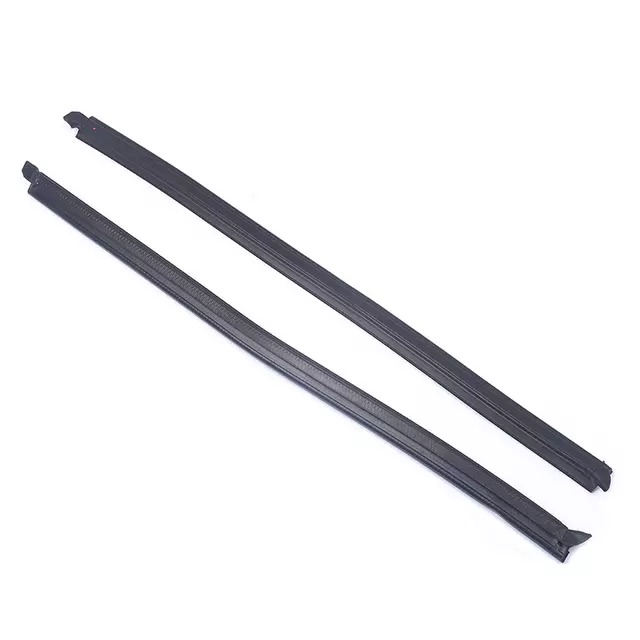
EPDM doesn’t win outdoors because it’s trendy. It wins because it shows up in repeated, proven use cases where weather resistance and long life are non-negotiable.
Industry | Common Application | Key Performance Need |
Construction | Window and curtain wall seals | Weatherproofing |
Automotive | Door and trunk sealing | UV and vibration resistance |
Industrial | Outdoor cabinets | Dust and moisture control |
Buildings need seals that handle rain, wind, dust, and expansion/contraction. EPDM sealing strips are widely used in:
● doors and windows
● curtain walls
● precast panel joints
These applications rely on EPDM’s water resistance and aging resistance to protect structures from moisture intrusion.
Vehicles face direct sun, rain, and constant vibration. EPDM sealing strips are commonly used on:
● doors and windows
● sunroofs
● hoods and trunks
They help keep the cabin airtight, reduce wind noise, and block water and dust.
This is a space where manufacturing consistency matters. Xinqiang describes itself as an advanced manufacturer focused on automotive rubber seals and related parts, serving well-known enterprises and operating a large facility footprint, which reflects the scale and process maturity that automotive supply chains tend to require.
Outdoor equipment needs protection from dust, water, and vibration. EPDM sealing strips show up in:
● electrical cabinets and control boxes
● industrial doors and access hatches
● water conservancy and marine sealing
The source specifically calls out industrial equipment protection and water/marine use cases, aligned with EPDM’s water and aging resistance.
When selecting an EPDM Sealing Strip for outdoor conditions, structure plays a critical role. Different forms are designed to meet different mechanical and environmental demands. Understanding the distinction helps ensure proper sealing performance and long-term durability.
Type | Key Strength | Typical Advantage | Moisture Performance |
Solid EPDM Sealing Strip | Higher tensile strength | Handles heavier loads and stronger compression forces | Suitable for general outdoor exposure |
Closed-Cell EPDM Foam Strip | High compressibility | Adapts easily to uneven gaps | Very low water absorption (often below 5%) |
Closed-cell EPDM is frequently selected for moisture-related sealing because its internal structure limits water penetration, making it especially effective in rain-exposed or high-humidity outdoor environments.
Hardness affects how the strip compresses and rebounds. The source notes EPDM hardness can range from about 30A (soft) to 90A (rigid) depending on formulation.
In practical terms:
● softer strips help fill uneven gaps and reduce closing force
● firmer strips support shape retention and stability in larger assemblies
“EPDM” is not one recipe. Fillers, curatives, and plasticizers change how it behaves over time. The source emphasizes that compounding choices can tune temperature resistance, compression set, and other performance targets.
If your outdoor seal must handle years of UV exposure, heavy cycling, or specific cleaning routines, this matters. You’re not just buying “EPDM.” You’re buying a compound designed for your conditions.
The EPDM Sealing Strip fits outdoor demands. It resists UV, ozone, water, and heat swings. It stays flexible across climates and keeps sealing strength as structures move.
It also reduces noise and vibration. It helps improve energy efficiency in buildings and vehicles. Its solid and closed-cell options allow precise engineering for different gaps and loads.
Guangzhou Xinqiang Automotive Components Co., ltd. applies certified manufacturing and automotive expertise to deliver reliable EPDM sealing solutions. Their products offer long-term durability and real lifecycle value for demanding outdoor applications.
A: An EPDM Sealing Strip resists UV radiation, ozone, rain, and temperature swings. It stays flexible across seasons and maintains sealing force even after long exposure to harsh weather.
A: The EPDM Sealing Strip remains elastic in both freezing and high-heat conditions. This stability helps prevent cracking in winter and softening or deformation during hot summers.
A: Yes. Closed-cell EPDM Sealing Strip options have low water absorption. They are widely used in doors, windows, automotive seals, and outdoor equipment to block moisture intrusion.
A: Compared to many common rubbers, EPDM Sealing Strip provides better resistance to ozone and environmental aging. This leads to longer service life and fewer replacement cycles outdoors.
A: It can. By improving airtight sealing around gaps, EPDM Sealing Strip reduces air leakage. This supports more stable indoor temperatures and improved HVAC efficiency.
A: Start by identifying UV exposure, temperature range, and compression requirements. Then choose the proper hardness, profile shape, and solid or closed-cell structure to match your outdoor application.


