
Views: 0 Author: Site Editor Publish Time: 2026-03-06 Origin: Site


Choosing the right seal can affect product life and maintenance cost. Many buyers compare EPDM Sealing Strip and PVC because they look similar in use. Both can block water and air. However, they react very differently when exposed to heat, cold, sunlight, oil, and movement.
If you source seals for doors, windows, vehicles, HVAC systems, or industrial enclosures, this question often appears: which material will last longer in your environment without raising repair or replacement costs? The answer depends on performance demands, not just price.
In this article, we will clearly compare EPDM Sealing Strip and PVC across temperature range, weather resistance, chemical exposure, flexibility, and service life. You will understand where each material performs best and how to choose the right option for your project.
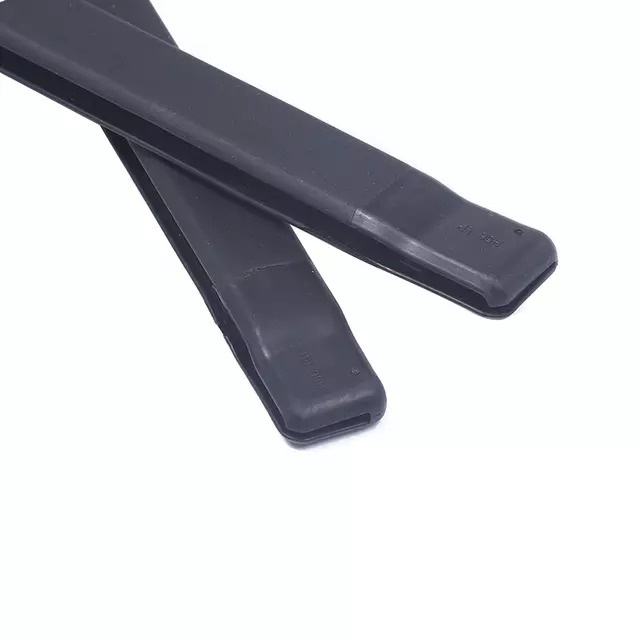
An EPDM sealing strip is a rubber profile made from Ethylene Propylene Diene Monomer. In plain terms: it’s designed to stay elastic for years, even when weather and temperature swing hard.
EPDM is a synthetic elastomer. Its polymer structure supports long-term flexibility and stable shape recovery under compression. That’s why it’s widely used where seals open and close repeatedly, or where parts expand and contract daily.
Below are typical performance characteristics seen in many EPDM sealing strip grades:
Property | Typical EPDM Performance |
Temperature range | -50°C to +150°C |
UV resistance | Excellent |
Ozone resistance | Excellent |
Elongation | 300–600% |
Water resistance | Very high |
These values explain why it often appears in exterior seals. It remains flexible in freezing winter. It does not soften excessively in summer heat.
You’ll see EPDM sealing strip profiles in:
● Window and door weatherstripping
● Automotive weatherstrips and body seals
● Roofing and facade joints
● HVAC housings and service panels
● Outdoor electrical cabinets and equipment enclosures
Why buyers keep choosing it: it tends to deliver predictable, long-term sealing in outdoor and high-cycle use.
Tip: If your application lives outdoors and cycles open/close often, start your evaluation using EPDM sealing strip as the baseline—then check whether oil/grease exposure changes the decision.
PVC sealing strips use Polyvinyl Chloride—a thermoplastic. It can be made rigid or flexible depending on additives. In sealing, flexible PVC is the common choice.
PVC is produced by polymerizing vinyl chloride, then adjusting performance using plasticizers and stabilizers. As a thermoplastic, it can soften under heat during processing and form strong bonds at seams.
Property | Typical PVC Performance |
Temperature range | -20°C to +70°C |
Oil resistance | Good |
Chemical resistance | Good for many oils/fuels |
Elongation | 200–400% |
UV resistance | Moderate |
PVC performs reliably within moderate temperature ranges and maintains stable mechanical strength in controlled environments. It resists many oils, fuels, and common industrial fluids, which makes it suitable for factory floors and equipment housings. While its UV resistance is not as strong as EPDM, it can still function effectively in semi-protected or indoor installations.
PVC sealing strips often appear in:
● Industrial panels and enclosures
● Cabinets and appliance seals
● Electrical insulation or edge trims
● Areas where oil, fuel, or certain chemicals are present
PVC often wins when you need seam strength, oil resistance, or appearance options.
You don’t need a “best material.” You need the best fit. Let’s compare them using the factors most buyers use to decide.
Temperature range is one of the fastest ways to narrow the choice.
● EPDM sealing strip: commonly performs around -50°C to +150°C
● PVC sealing strip: commonly used around -20°C to +70°C
If your seal sees cold winters, hot summers, engine-bay proximity, rooftop exposure, or hot air ducting, EPDM tends to give more safety margin. :contentReference[oaicite:3]{index=3}
Outdoor exposure is where EPDM sealing strip is widely trusted.
● EPDM: strong resistance to UV and ozone, keeps flexibility over time
● PVC: can work outdoors, but is usually selected for less UV-intensive duty or more controlled exposure
If the seal lives on an exterior window frame, vehicle body, rooftop, or outdoor cabinet, weather resistance matters more than lab numbers. EPDM typically holds up well in those long cycles of sun + moisture + temperature change.
This is where PVC often takes the lead.
● PVC: strong performance around oils, grease, and some industrial chemicals
● EPDM: strong around water, many acids/alkalis, and general weathering
So if you’re sealing near kitchen exhaust systems, factory floors, or equipment that sees oily residues, PVC becomes a smart candidate. :contentReference[oaicite:4]{index=4}
Both can flex. The difference is how well they recover after repeated compression.
● EPDM sealing strip: higher elasticity and recovery, well-suited to dynamic sealing
● PVC sealing strip: flexible in many builds, often used where movement is lower or controlled
For doors and windows that open daily, elastic recovery is a practical KPI. EPDM’s rubber behavior typically gives steadier contact pressure over time.
Both can block water. The real-world difference shows up in seam strategy and long-term stability.
● EPDM sealing strips are often installed as continuous profiles or bonded sections for weather sealing.
● PVC can support heat-welded seams in some systems, which can be valuable when seam strength is a top requirement.
If your design relies on welded seams to reduce leak risk, PVC may align better. If your design relies on long-run compression sealing in outdoor exposure, EPDM sealing strip is often the safer pick.
In many building and exterior uses, EPDM sealing strip is selected for long service life—often 20+ years in suitable conditions. PVC can deliver reliable service too, especially indoors or where chemical resistance is the driver. :contentReference[oaicite:5]{index=5}
To keep this comparison easy for procurement, here’s a quick decision table:
Decision factor | EPDM Sealing Strip | PVC Sealing Strip |
Extreme hot/cold environments | Strong fit | Better for moderate range |
Sun/ozone exposure | Strong fit | Better for controlled exposure |
Oil/grease contact | Works in many cases | Strong fit |
Dynamic sealing (movement, vibration) | Strong fit | Works best for lower movement |
Seam strategy | Commonly bonded/assembled | Can support heat welding in some designs |
Color/appearance options | Commonly black/gray | Wide color/clear options |
Typical use | Outdoor + high-cycle sealing | Industrial + oil/chemical + appearance needs |
Note: When you compare quotes, ask suppliers to confirm the exact compound grade and test basis. “EPDM” and “PVC” can vary a lot by formulation, hardness, and additives. A clean datasheet and consistent QA system matter. (For example, Xinqiang highlights ISO14001, ISO45001, and IATF16949 certifications.)
Application Scenario | Recommended Material | Core Reason |
Outdoor windows & doors | EPDM sealing strip | UV resistance + long-term elasticity |
Automotive weatherstripping | EPDM sealing strip | Vibration tolerance + temperature stability |
Industrial / grease exposure | PVC sealing strip | Oil resistance + seam strength |
Budget indoor systems | PVC sealing strip | Cost efficiency + moderate conditions |
Best fit: EPDM sealing strip
Why it works here:
● Handles sun exposure and ozone well
● Holds flexibility through cold mornings and hot afternoons
● Keeps compression sealing contact over long cycles
If your product is a door or window system expected to last for years, EPDM sealing strip is often the default choice for exterior weatherstripping.
Best fit: EPDM sealing strip
Automotive sealing needs:
● Elastic recovery
● Vibration tolerance
● Temperature swings
● Outdoor exposure
This is also where experienced suppliers matter. Xinqiang’s product scope includes automotive rubber seals and related components, which aligns well with EPDM sealing strip use cases that demand stable long-run performance. :contentReference[oaicite:7]{index=7}
Best fit: PVC sealing strip
If your seal sits near:
● Oil mist
● Grease residue
● Industrial fluids
● Restaurant exhaust zones
PVC becomes a practical material choice because it tends to handle those conditions well and can support strong seam strategies in some designs.
Best fit: PVC sealing strip
If the environment is controlled (indoor, low UV, moderate temperature swings), PVC can deliver solid performance at a competitive cost. It’s commonly used in cabinets, enclosures, and general indoor weatherproofing.
In many markets:
● PVC sealing strip solutions are priced lower at the start.
● EPDM sealing strip often costs more upfront due to compound and performance targets.
This is where the long-term math changes:
● If a seal is difficult to access, costly to replace, or tied to warranty risk, longer-life materials reduce downstream cost.
● For outdoor products or high-cycle openings, EPDM sealing strip can reduce replacements and service calls.
A simple way to compare value is to ask:
● How much does replacement cost (labor + downtime + logistics)?
● What’s the cost of a leak or dust ingress event?
● What’s the warranty exposure if seals fail early?
If those costs are high, EPDM sealing strip tends to deliver stronger value in harsh environments. If your environment is stable and oil/grease is the main stressor, PVC can be a value leader.
Use this quick checklist to decide fast—then validate using samples and tests.
Ask:
● Is it outdoors?
● Does it see direct sunlight most days?
● Do temperature swings happen daily?
If yes, EPDM sealing strip often becomes the primary candidate.
Ask:
● Will oils, grease, fuels, or industrial chemicals touch the seal?
If yes, PVC sealing strip deserves a close look.
Ask:
● Does the door, panel, or part open and close every day?
● Does it vibrate or flex in service?
If yes, EPDM sealing strip usually aligns better due to elastic recovery.
Ask:
● Is this a short-term solution?
● Or should it last through long product cycles?
Long service life targets often lean EPDM for exterior duty, while PVC can be ideal for many indoor or industrial builds.
EPDM Sealing Strip often fits outdoor sealing that faces sun, weather, and big temperature swings. It resists UV and ozone well, and it keeps elastic recovery during long service life. PVC often fits projects that face oils or grease, need strong seams, or need color options. It also works well for cost-driven indoor builds.
In many exterior and high-performance systems, EPDM Sealing Strip is the safer long-term choice. In industrial settings where oils and chemicals appear often, PVC can be the better fit. If you still feel unsure, test two sample profiles in the same shape under real cycling and compression conditions, then choose the one that keeps sealing contact longer. Guangzhou Xinqiang Automotive Components Co., ltd. supports this process by supplying consistent sealing solutions, and its EPDM sealing strip helps buyers improve durability and reduce replacement risk.
A: The main difference is environmental performance. EPDM Sealing Strip offers better resistance to UV, ozone, and extreme temperatures, making it ideal for outdoor use. PVC performs well in moderate conditions and in environments where oil or grease exposure is common.
A: EPDM Sealing Strip is better for applications exposed to sunlight, rain, snow, and large temperature changes. It maintains flexibility and compression recovery over time, which helps ensure long-term sealing reliability.
A: In most exterior and high-movement applications, EPDM Sealing Strip tends to have a longer service life. Its resistance to weather aging allows it to maintain performance for many years without cracking or hardening.
A: Yes, PVC generally performs better in environments with oils, fuels, or grease. If the sealing system operates in industrial settings with frequent chemical exposure, PVC may be more suitable.
A: EPDM Sealing Strip performs well in both very low and high temperatures, often from -50°C to +150°C. This wide range makes it reliable for outdoor construction and automotive applications.
A: Start by reviewing your operating environment, including UV exposure, chemical contact, and movement requirements. Testing EPDM Sealing Strip and PVC samples under real working conditions can help confirm which material delivers better long-term value.


