
Views: 88 Author: Site Editor Publish Time: 2025-12-10 Origin: Site


Feature | TPV | EPDM |
|---|---|---|
Compression Set | Lower values | Higher values |
Heat Aging | Retains properties better | Less effective |
Weather Resistance | Retains color and properties | More susceptible |
Chemical Resistance | Better due to PP encapsulation | More prone to swell |
Choose automotive sealing strips that fit your car’s needs. Consider factors like sealing efficiency, weather resistance, and durability.
EPDM is a good choice for most cars. It does not cost a lot. It lasts 10 to 15 years. It protects well against bad weather.
TPV is very strong and bends easily. It works well for parts that get hot or touch chemicals. It can last at least 15 years.
Silicone works best in very hot or cold places. It stays bendy from -60°F to 390°F. But, it costs more money.
Think about what your car needs before you pick a sealing strip. Look at things like how it handles weather, heat, and your budget.
For normal driving, EPDM is a good pick. For tough jobs, TPV or silicone might be better.
When picking sealing materials for your car, you want to know how each one works. EPDM, TPV, and silicone are the main rubber choices for car sealing. Each type has its own special benefits.
EPDM is a top rubber for car sealing. It fights off rust, ozone, and damage from the sun. This rubber does not break down easily in bad weather or sunlight. EPDM is light, so you can add fillers and it still works well. This makes EPDM a cheaper option for many seals. EPDM rubber is strong and does not tear easily. It works in many kinds of weather. But EPDM can get hard if it gets very cold. EPDM is simple to shape, so it is easy to make. You see EPDM in door, window, and trunk seals.
TPV rubber is also a good pick for car sealing. It mixes plastic and rubber, so TPV is bendy and tough. TPV keeps its color and shape even after lots of sun and heat. This rubber does not get ruined by many chemicals. TPV bounces back better than EPDM after being squeezed. TPV is easy to recycle, which helps the planet. TPV is quick to make because it works like plastic. You find TPV in weather seals and under-the-hood strips.
Silicone rubber is best for sealing strips that face very hot or cold places. It stays bendy from -60°F to 390°F. Silicone does not break down from sunlight and lasts a long time. This rubber is softer and bends more than EPDM or TPV, so it seals tightly. Silicone rubber lasts a long time. But it costs more and is not used as much in regular cars. You see silicone in special cars that need to handle big temperature changes.
Tip: Check the table below to see how these rubber sealing materials compare.
Material | Weather Resistance | Temperature Range | Flexibility | Manufacturability | Durability |
|---|---|---|---|---|---|
EPDM | Superior | -40°F to +250°F | Moderate | High | Good |
TPV | Excellent | -60°F to +275°F | High | Very High | Good |
Silicone | Good | -60°F to +390°F | Very High | Moderate | Excellent |
When you pick sealing strips for cars, you want them to last. You also want them to keep their shape. How long they last is important. It affects how well your car stays sealed. Let’s see how EPDM, TPV, and silicone do with life, tear strength, and compression set.
EPDM is strong and does not tear easily. It seals well for a long time. Most EPDM strips last 10 to 15 years in cars. EPDM does not let water in. If you take care of it, EPDM can last up to 50 years. EPDM keeps its shape in normal weather. But it can lose sealing power in very hot places. EPDM is used a lot because it works well for many years. Sometimes, EPDM needs extra help to fight damage in tough places.
EPDM strips last 10 to 15 years in cars.
EPDM stops water and ozone, so it stays strong.
EPDM is hard to tear, so it is good for tough spots.
EPDM can break down fast in high heat, which hurts its life.
TPV lasts a long time and seals well. TPV is found in many car strips. It mixes rubber and plastic, so it bends and stays tough. TPV strips usually last at least 15 years. This means TPV can work longer than EPDM. TPV is good at keeping its shape after being squeezed. After 1000 hours at 70°C, TPV does better than EPDM. TPV keeps sealing well over time. TPV is easy to recycle, which helps the earth.
TPV strips last at least 15 years in cars.
TPV gives long life and saves weight in cars.
TPV keeps sealing with lower compression set than EPDM.
TPV works well for a long time and is quick to make.
Silicone works best in tough places. It lasts longer than EPDM and TPV. Silicone is used in cars where it gets very hot or wet. Silicone does not get old fast, even in bad weather. It keeps sealing well in hard spots. Silicone has the lowest compression set. This means it keeps its shape for a long time. The table below shows how silicone does with compression set:
Standard | Maximum Compression Set % |
|---|---|
SAE AMS 3195/6 | 60 |
ASTMD 1056 | 60 |
EN ISO 1856 | 15 |
Silicone lasts longer than EPDM and TPV in hard places. It gives strong seals for a long time. Silicone is best when you need strips for big temperature changes.
Silicone does not age fast, even in heat and ozone.
Silicone keeps sealing with very low compression set.
Silicone lasts the longest and is best for car sealing.
Tip: If you need the best seal in tough places, pick silicone. For most cars, EPDM and TPV last long and cost less.
EPDM is great at stopping weather from hurting your car. It stands up well to sunlight and UV rays. Sun, ozone, and rain do not break it down. EPDM stays bendy and keeps its shape for years. It does not crack or lose color fast. Many car weather seals use EPDM because it works well outside.
EPDM blocks ozone very well.
EPDM blocks UV rays very well.
EPDM does not get old or worn out fast.
The table below shows how EPDM does against other materials in weather:
Material | UV Resistance | Ozone Resistance | Additional Notes |
|---|---|---|---|
EPDM | Excellent | Excellent | Strong resistance to weathering and aging. |
EPDM can get less stretchy over time, mostly when it is hot. In tests, EPDM gets less flexible after 1000 hours of heat and weather. This means it can lose some stretch after a long time in tough weather.
TPV is also very good at fighting bad weather. TPV keeps its color and shape after lots of sun and ozone. It does not crack or lose its seal quickly. TPV is strong against weather and UV rays, so many cars use it.
TPV blocks ozone very well.
TPV blocks UV rays very well.
TPV stays strong and lasts a long time.
The table below shows how TPV does in weather:
Material | UV Resistance | Ozone Resistance | Additional Notes |
|---|---|---|---|
TPV | Excellent | Excellent | Good mechanical properties and durability. |
In tests, TPV stops changing after 500 hours in bad weather. TPV stays steady and does not lose much stretch. You can trust TPV to last a long time in rough weather.
Silicone is best for places with really hard weather. You can use silicone where it is very hot or cold. Sun and rain do not break silicone down. It keeps its shape and bend for a long time. People pick silicone for special car parts that need strong weather seals.
Silicone does not get old from weather or UV rays.
Silicone keeps sealing in very hot or cold places.
Silicone works well in both hot and cold weather.
Silicone does not have the same UV and ozone test scores as EPDM and TPV. But it works well in a wide range of temperatures and bounces back well. Silicone is a top pick for car seals that face tough weather.
Tip: EPDM and TPV are best for weather and UV. Pick silicone if you need a seal for very hot or cold places.
You need sealing strips that work in hot and cold. EPDM does well in both kinds of weather. EPDM stays bendy from -50°C to +150°C. EPDM O-rings also work from -55°C to 150°C. EPDM rubber keeps its strength between -50°C and +150°C. You can use EPDM for car doors and windows in summer and winter. EPDM does not crack or lose shape when the temperature changes.
EPDM stays bendy in cold and hot.
EPDM works from -50°C to +150°C.
EPDM keeps sealing in most weather.
TPV works well in both low and high heat. TPV is not as good as silicone for high heat, but it is better than many plastics. TPV can handle up to 135°C (275°F) all the time. TPV does not get tired from bending and fights oil, so it lasts longer. TPV keeps its shape and color after lots of heat. You see TPV in engine seals and weather strips that face changing heat. TPV is a smart pick if you want good price and temperature resistance.
Material | High-Temperature Performance | Notes |
|---|---|---|
TPV | Up to 135°C (275°F) | Good for bending and oil resistance. |
EPDM | Up to 135°C (275°F) | Breaks down faster above this heat. |
Silicone | Up to 230°C (446°F) | Best for very high heat. |
Tip: TPV works well in places with changing heat, but silicone is better for very hot spots.
Silicone is best for very high heat. Most silicone strips work from 200–230°C all the time. Short bursts can go up to 250–280°C. Special silicone can handle 250°C all the time and 300°C for short times. Silicone stays bendy and does not break in very hot or cold places. Pick silicone if your car faces very hot engines or freezing weather. Silicone costs more, but it lasts the longest and handles heat best.
Silicone works from -60°C to 230°C or more.
Silicone keeps sealing in very hot places.
Silicone lasts longer than EPDM and TPV in tough heat.
Note: For regular cars, EPDM and TPV work well. For racing or special cars, silicone is the best pick.
EPDM is good at fighting off many chemicals in cars. It does not get damaged by water, weak acids, alkalis, or fluids with glycol. This makes EPDM a smart pick for seals that touch coolants or cleaners. EPDM also stands up to steam and some gentle solvents. But you should not use EPDM where there are oils, fuels, or hydrocarbons. These can make EPDM swell and not work as well.
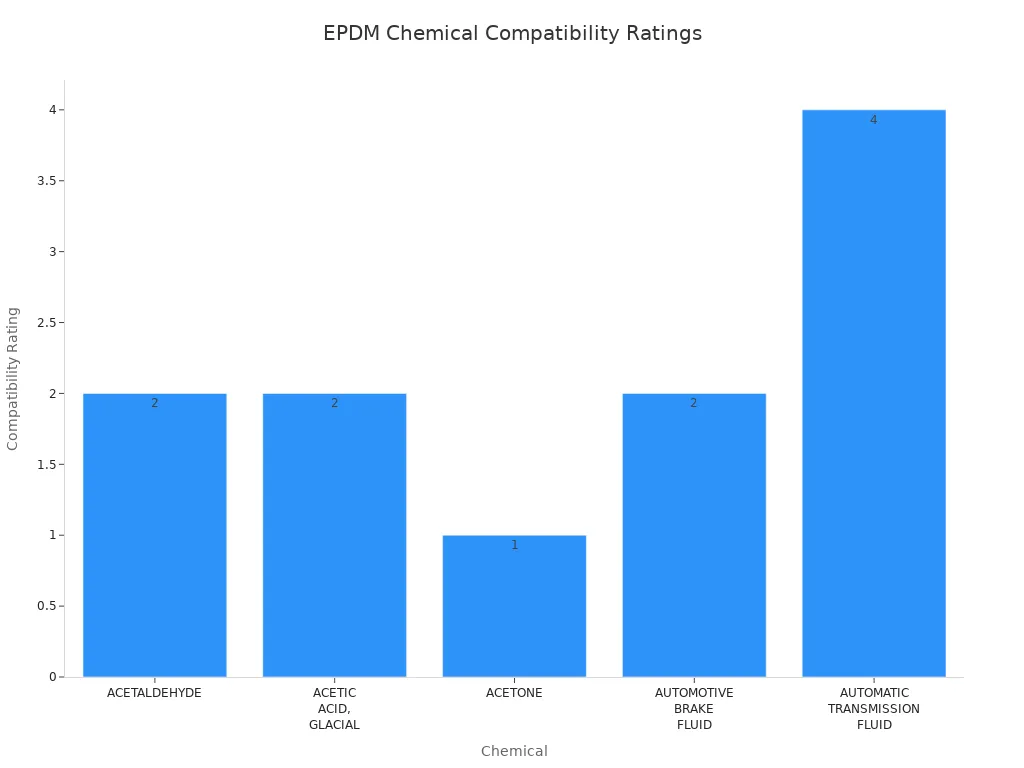
The table below shows how EPDM does with some car chemicals:
Chemical | Material | Rating |
|---|---|---|
Acetaldehyde | EPDM | 2 |
Acetic Acid, Glacial | EPDM | 2 |
Acetone | EPDM | 1 |
Automotive Brake Fluid | EPDM | 2 |
Automatic Transmission Fluid | EPDM | 4 |
You can see EPDM works well with many fluids, but not all. The chart below gives a picture of how EPDM matches with five car chemicals:
TPV mixes rubber’s bendiness with plastic’s strength. This gives TPV good chemical resistance for most car uses. TPV stands up to many acids and chemicals, so it lasts longer in tough places. Santoprene, a kind of TPV, does better than EPDM in some hard jobs. But TPV does not do well with hot oils or water-based liquids. If your car part touches these, you may need a different material.
Here is a quick look at how TPV and EPDM handle fluids:
Property | Test Standard | EPDM Compound BD-750 | TPV Compound BD-900 |
|---|---|---|---|
Fluid Resistance (IRM 903) | ISO 1817 | Volume Swell ≤15% | Volume Swell ≤12% |
TPV gives good performance and chemical resistance for most seals, but you should check what fluids your car will have.
Silicone works great in very tough places. You can use silicone when you need strong chemical resistance, like with brake fluids. Silicone stands up to many harsh chemicals, but not to fuels or some acids. For the best results, you might need special types like fluorosilicone.
Silicone gels are good for car electronics, but strong fluids like fuels and acids can still cause trouble. New silicone types help protect and keep seals strong, even with tough chemicals.
The table below shows how silicone does with some car fluids:
Chemical | Material | Rating |
|---|---|---|
Automotive Brake Fluid | Silicone | A |
Automatic Transmission Fluid | Silicone | D |
Acetaldehyde | Silicone | A |
Acetic Acid | Silicone | C |
Acetone | Silicone | D |
You get the best chemical resistance and long life from silicone in the right jobs. Always pick the material that fits your car’s needs for the best results.
You will find that epdm sealing strips offer great value for most automotive needs. Epdm rubber costs less than many other high-performance elastomers. This makes it a smart choice if you want to save money without losing quality. Epdm is easy to mold into different shapes, so you can use it for many car parts. It also resists heat, cracking, and shrinking, which means you get long-lasting performance at a lower price.
Here is a table showing the average price per meter for epdm strips:
Quantity Range | Price per Meter |
|---|---|
0-999 Meters | US$0.455 |
1,000-4,999 Meters | US$0.40 |
5,000+ Meters | US$0.15 |
You can see that buying in bulk lowers your cost. For example, a 10-meter roll of epdm rubber strip can cost about €171.50. This makes epdm a cost-effective solution for both small and large projects.
Tpv sealing strips give you a balance between price and performance. Tpv is a blend of rubber and plastic, which helps it last longer and resist weather. You might pay more for tooling when you choose tpv, but you can save money over time. Tpv can offer over 60% cost savings compared to epdm in some uses. This happens because tpv has better durability and sealing performance, which lowers your total life cycle cost.

Tpv is also recyclable, which adds value if you care about the environment. You get excellent compression set and chemical resistance, but you should know that tpv may not wear as well as epdm in some spots.
Silicone sealing strips cost more than epdm or tpv. The price of silicone changes a lot because raw material costs go up and down. Making automotive-grade silicone also takes special tools and skills, which adds to the price. If you need the best performance in extreme heat or cold, silicone is worth the extra cost. However, if you have a tight budget, you may want to use silicone only for special parts.
Note: High costs for silicone limit its use in regular cars, but you get top performance for tough jobs.

Picking the right sealing strip depends on where you use it. You need to think about how long it lasts and how flexible it is. Cost matters too. The strip should stand up to weather, chemicals, and heat or cold.
You see epdm sealing strips in many car parts. Car makers use epdm for windows, doors, and trunks. This material keeps water, dust, and noise out. Epdm works in hot and cold places. It keeps its shape and blocks rain and snow. Epdm fights heat, oxidation, and ozone. It lasts a long time. You get good performance in sun, rain, or snow.
Epdm is easy to shape, so making it is fast. You save money because epdm costs less than other materials. More cars use epdm every year. If you want strong protection and good value, pick epdm for doors, windows, and trunks.
Tip: Use epdm for daily sealing jobs. It gives you strong seals and saves money.
Tpv sealing strips work in many car parts. You find tpv in weather seals, gaskets, and hoses. Tpv is light, so cars use less fuel. It works well in hot places and with chemicals. Tpv keeps its color and shape after long use. You can recycle tpv, which helps the planet.
Here are some places you use tpv sealing strips:
Weather seals
Gaskets
Under-hood parts
Car hoses
Beltline seals
Windshield seals
HVAC parts
Glass seals
Inside and outside skins
Tpv is quick to make because it acts like plastic. You get good flexibility and it lasts long. Santoprene tpv seals well, weighs less, and looks nice. Tpv fights oil, grease, and tearing. It works in tough spots. For hybrid or electric cars, tpv is a smart pick. You also help the environment.
Note: Pick tpv for light, flexible, and recyclable strips. Tpv works well in hot and chemical-filled places.
Silicone sealing strips are best for tough jobs. Use silicone when you need strong and flexible seals. Silicone works in very hot or cold places. You see silicone in engine hoses, gaskets, seals, o-rings, wire covers, and connectors. Silicone protects wires from heat and weather. It keeps its shape and seals tight in hard spots.
Here is a table showing where silicone works best:
Application Type | Description |
|---|---|
High-temperature hoses | Used in areas exposed to high heat, ensuring durability and performance. |
Gaskets | Essential for sealing engine and transmission components against leaks. |
Seals | Provide tight seals to maintain engine performance and extend part life. |
O-rings | Used in various connections to prevent leaks and ensure flexibility. |
Wiring insulation | Protects electrical components from heat and environmental factors. |
Connectors | Ensures reliable connections in high-stress environments. |
Weather resistance | Suitable for outdoor applications where exposure to elements is a concern. |
Silicone costs more, but you get strong seals and heat protection. Pick silicone for race cars, special cars, or parts that face tough conditions.
Tip: Use silicone for hard jobs. It gives you strong seals and bends well in tough places.
Use this guide to pick the best sealing strip:
Epdm: Good for doors, windows, and trunks. Use it for weather protection and saving money.
Tpv: Good for under-hood parts, gaskets, and weather seals. Pick it for light, flexible, and recyclable needs.
Silicone: Good for engine gaskets, hot hoses, and wire covers. Use it for tough jobs and extreme places.
Remember: Match the sealing strip to your car’s needs. Think about heat, chemicals, flexibility, and cost before you choose.
You want a sealing strip that works well for your car. EPDM is a good choice because it lasts long and costs less. TPV is best if you want to recycle and make things easily. Silicone works great in places that get very hot or cold. Look at the table below to see what each material does well and what it does not. Pick the one that fits your car’s needs and your budget.
Material | Advantages | Disadvantages |
|---|---|---|
EPDM | Stands up to weather, bends easily, costs less | Does not work well with oil, hard to install |
Silicone | Handles high heat, stays bendy, safe to use | Costs more, can rip, does not work well with oil |
TPV | Can be recycled, easy to make, fights weather | Does not handle heat or some liquids well, not as strong |
EPDM is good for saving money and blocking weather. TPV bends more and is easy to recycle. Silicone works best in very hot or cold places. Each type is best for different car jobs.
TPV strips are easy to recycle. EPDM can be recycled, but it is not common. Silicone is hard to recycle. TPV helps you make less trash and is better for the planet.
Silicone lasts the longest when it is very hot. It keeps a strong seal and does not get old fast. EPDM and TPV work well in normal heat, but silicone stays bendy and strong in extreme heat.
EPDM fights off coolants and weak chemicals. TPV stands up to lots of acids. Silicone works well with brake fluids. Do not use any of these with oils or fuels unless you check first.


